Cook Line Surfaces
Degreasing for accessible equipment exteriors, backsplashes, fronts, sides, ledges, and the reachable spaces around fryers, ranges, and ovens.
Serving Pittsburgh, Pennsylvania & surrounding areas
Remove baked-on grease, food residue, and floor buildup with a detailed cleaning plan fitted to your kitchen, equipment, and operating schedule.
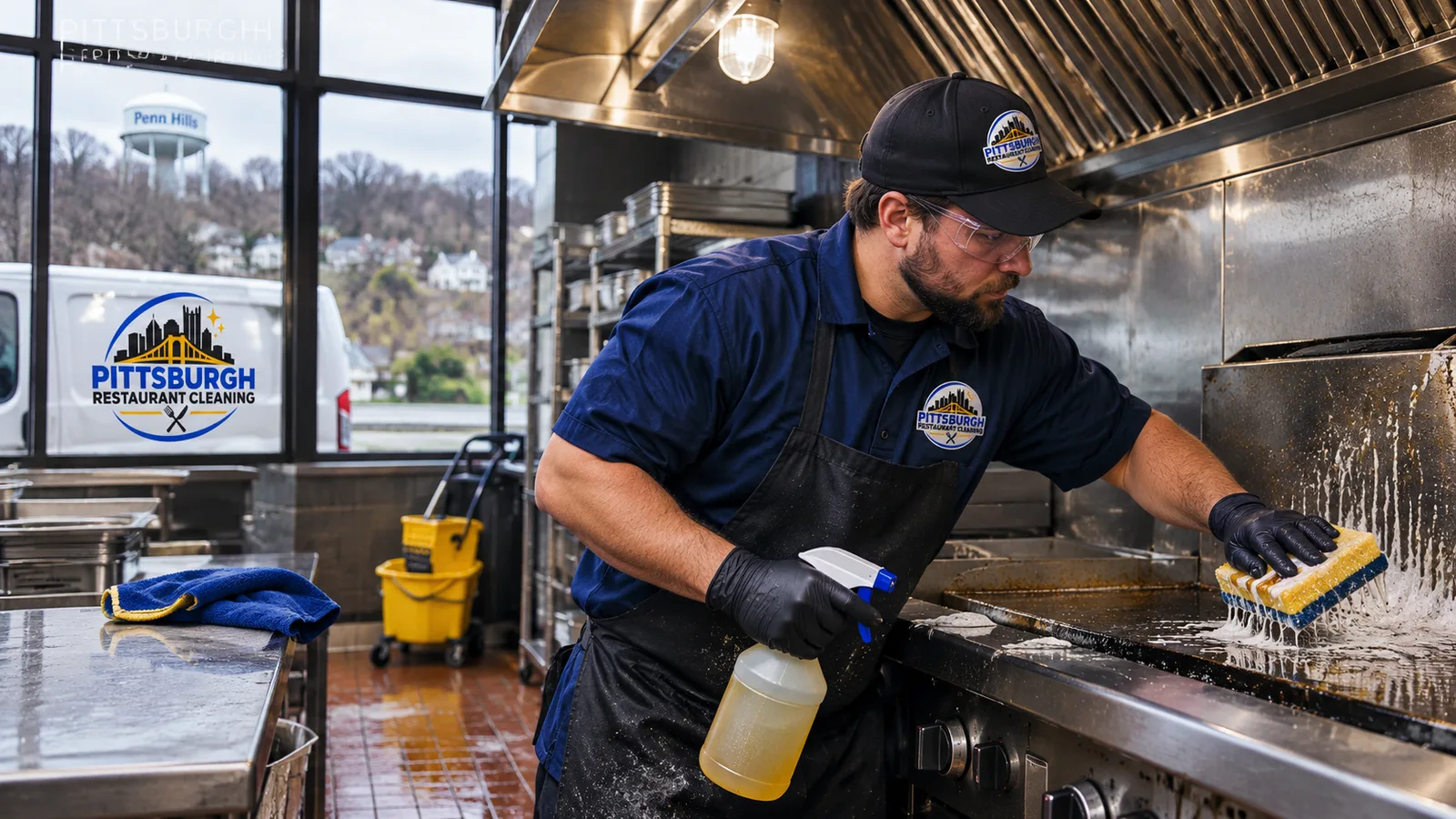
Restaurant Kitchen Deep Cleaning Penn Hills service targets the residue that routine closing work cannot fully remove. Grease vapor settles on walls, equipment sides, casters, pipes, and other overlooked surfaces. Spills collect beneath appliances, while grout lines and floor edges retain soil even after repeated mopping.
Pittsburgh Restaurant Cleaning builds the scope around your kitchen rather than applying a generic checklist. Before cleaning starts, an experienced restaurant service team in Pittsburgh, PA assesses surface materials, equipment access, soil conditions, and the hours available for work. This approach is useful in Penn Hills, where restaurants may operate in compact neighborhood storefronts, larger shopping areas, or freestanding buildings with very different kitchens.
The goal is a clean, workable facility with attention paid to the places that affect daily sanitation. The agreed scope can cover cook lines, preparation areas, warewashing zones, dry-storage floors, and service corridors. Exhaust duct cleaning, pest control, equipment repair, and other regulated specialty work are separate unless they are expressly included in writing.
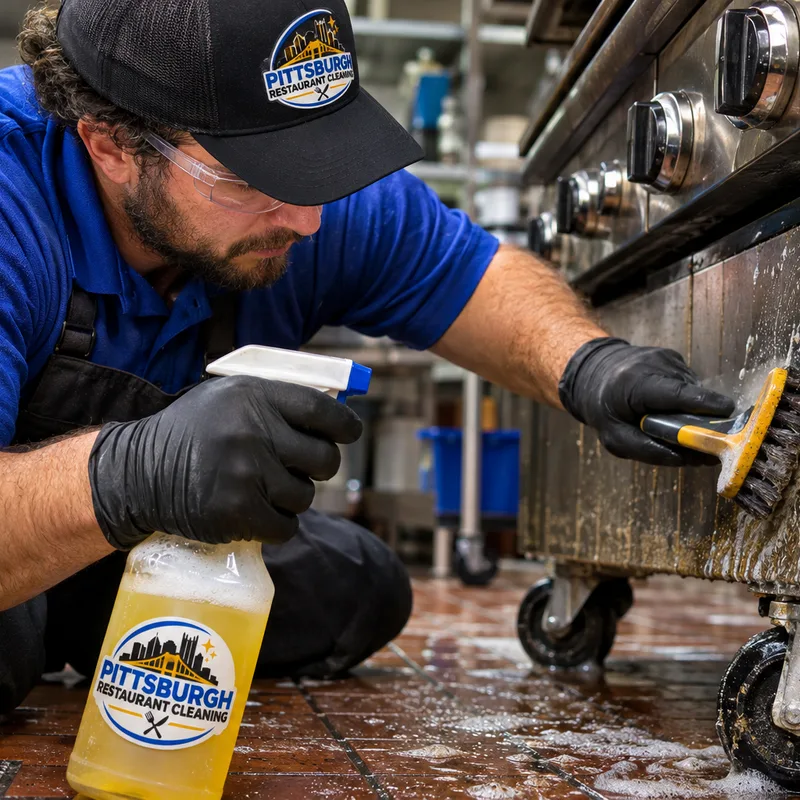
A deep clean commonly starts with movable equipment and accessible areas around the cook line. Technicians remove loose debris, apply a compatible degreaser, allow proper dwell time, agitate stubborn deposits, and recover the loosened soil. Stainless steel, sealed masonry, washable wall surfaces, and equipment exteriors each require suitable chemistry and tools.
Typical attention points include range and fryer exteriors, backsplash surfaces, oven fronts, worktables, shelving, sinks, splash zones, kick plates, casters, floor-wall junctions, and accessible spaces beneath equipment. Detachable components may be soaked or hand-cleaned when that work is within the agreed scope. Electrical controls, pilot assemblies, porous materials, and damaged surfaces require added care and should never be saturated indiscriminately.
Our team confirms what can be moved safely and what must remain in place. Heavy or connected equipment may require restaurant staff or a qualified equipment professional to disconnect or reposition it. This protects utility connections and keeps the cleaning crew focused on accessible, approved areas.
Degreasing for accessible equipment exteriors, backsplashes, fronts, sides, ledges, and the reachable spaces around fryers, ranges, and ovens.
Cleaning for washable work surfaces, sink surrounds, shelving, splash zones, and soil that collects around equipment legs and utility penetrations.
Detailed attention to corners, kick plates, casters, floor-wall junctions, and accessible spaces beneath movable equipment.
Mechanical agitation and soil recovery selected for the floor material, with extra attention to grout, grease tracks, edges, and traffic lanes.
A walk-through checks the agreed work areas, notes inaccessible or damaged surfaces, and identifies any condition that needs separate trade attention.
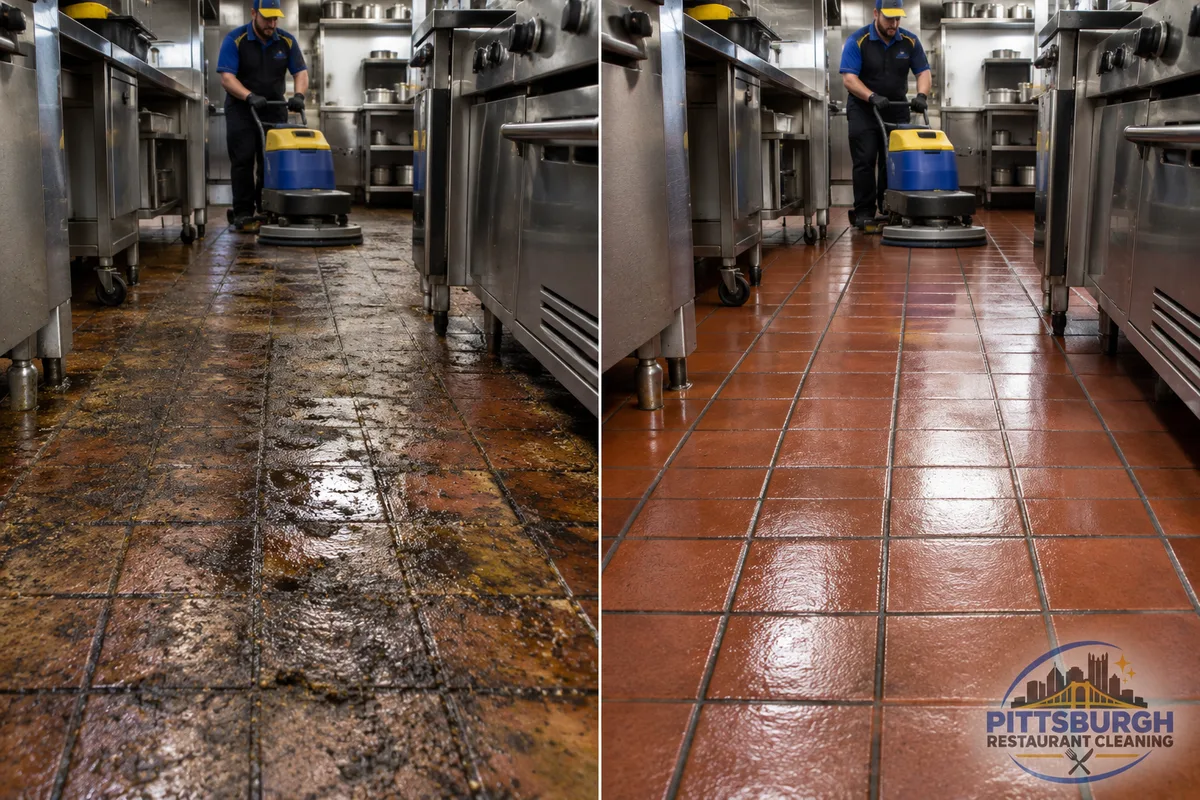
Restaurant Floor Cleaning Penn Hills work must address the residue that a mop can spread without fully removing. Kitchen grease binds with fine food particles and settles into grout, textured tile, corners, and transitions. In western Pennsylvania winters, moisture and deicing residue tracked through entrances can add another layer of soil to dining-room and back-of-house floors.
The cleaning method depends on the surface. Quarry tile and ceramic tile often tolerate alkaline degreasers and mechanical agitation when the product, dilution, and dwell time are appropriate. Resilient flooring and sealed concrete may need different pads, brushes, or chemistry. Technicians should identify loose grout, failed seams, cracked tile, and worn coatings before using powered equipment.
After dry debris is removed, cleaning solution is applied in controlled areas and agitated with a floor machine or suitable brushes. Dirty solution is then recovered rather than left to dry. Edges, corners, and spaces around fixed equipment receive hand detail. Multiple rinse passes may be needed when old detergent film or heavy degreaser residue remains.
We examine the kitchen layout, floor type, soil level, access constraints, water availability, and the areas that matter most to management. We also discuss operating hours and any building access requirements.
The work plan identifies included surfaces, exclusions, equipment that may be moved, and preparation expected from restaurant staff. Food, utensils, small appliances, and loose supplies should be removed or protected before cleaning.
Technicians dry-remove loose debris, protect sensitive components, apply surface-compatible chemistry, and use dwell time plus agitation to release deposits. Soil is collected and disposed of through an approved on-site route when available.
The floor is scrubbed using tools suited to its material and condition. Used solution is recovered, and the floor is rinsed as needed to limit slippery detergent residue.
We review the agreed areas, address reasonable touch-ups, and note inaccessible buildup, damaged finishes, leaks, or equipment conditions that fall outside the cleaning scope. Management receives clear expectations for drying and reopening the area.
Deep cleaning is easiest when the cook line is cool, food production has stopped, and staff have cleared the work areas. The time required depends on the kitchen size, grease load, equipment density, floor condition, and how much equipment can be moved safely. A compact kitchen with open access differs substantially from a large operation with several cooking lines and heavy fixed appliances.
Penn Hills restaurants also need to account for travel and opening routines during snow, freezing rain, and other winter weather. An overnight cleaning plan should leave enough time for rinsed floors and detailed equipment surfaces to dry before staff return. Entrances may need separate attention if tracked-in moisture or salt residue is present.
Restaurant management remains responsible for its food-safety procedures and any requirements imposed by the relevant authorities. Deep cleaning supports routine sanitation, but it does not replace staff cleaning schedules, pest management, equipment maintenance, or required hood and exhaust-system service. A clear scope keeps these responsibilities distinct.
Remove exposed food, disposable packaging, utensils, cookware, and small appliances from the scheduled work areas. Empty accessible shelving if it is included, and label anything that cannot be moved. Fryers, ranges, grills, and ovens should be shut down and cool enough to clean safely before the crew arrives.
Tell us about loose flooring, active leaks, sensitive coatings, unreliable drains, damaged electrical covers, or equipment that requires special handling. Confirm which floor drains or approved disposal points may be used. Grease-laden wastewater should never be directed into a storm drain, and local facility rules may limit where recovered solution can go.
Keep a manager or authorized contact available at the start and completion of service. That person can confirm priorities, approve access decisions, and review the finished scope. Good preparation gives technicians more time for actual degreasing and detail work.
A site review turns a general cleaning request into a written scope based on your equipment, floors, grease conditions, and available shutdown window.
Call for a Free QuotePricing depends mainly on kitchen size, grease accumulation, equipment density, floor condition, access, and the requested shutdown window. A light detail clean of a compact operation requires less labor and chemistry than restorative degreasing around several fryers, ranges, and fixed appliances. A site review in Penn Hills is the best way to confirm a written scope and price.
The shutdown window can range from several hours to a full overnight shift, depending on the scope and drying needs. Cool equipment, cleared work surfaces, and accessible floors shorten setup time. Winter moisture around entrances may require additional drying time before employees begin morning preparation.
Accessible areas beneath movable equipment can be cleaned when the equipment can be repositioned without risking gas, electrical, water, or drain connections. Heavy or hard-connected appliances may need to be disconnected by qualified personnel before the appointment. The initial review identifies these limits so the crew and restaurant staff know what to prepare.
Floor cleaning can be included when it appears in the written scope. The method is selected for quarry tile, ceramic tile, resilient flooring, or sealed concrete, and typically includes dry debris removal, degreasing, agitation, soil recovery, edge work, and rinsing. Repairs to cracked tile, failed grout, or damaged coatings are separate.
Yes, exposed food, utensils, cookware, loose supplies, and small equipment should be removed or securely protected before cleaning begins. Staff should also empty any shelving included in the scope and make sure cooking equipment is shut down and cool. These steps reduce contamination risks and give technicians clear access.
Deep cleaning removes soil, grease, and detergent residue, but it cannot guarantee removal of permanent staining or damage. Grout may remain discolored if it is worn, chemically damaged, or deeply stained, while cracked tile and failed floor coatings require repair rather than stronger cleaning. A test area can help set realistic expectations.
After-hours scheduling may be arranged based on crew availability, building access, and the time needed before reopening. Penn Hills operators should allow for setup, cleaning, inspection, and adequate drying rather than scheduling work directly against morning food preparation. Access instructions and an authorized contact should be confirmed in advance.
Tell Pittsburgh Restaurant Cleaning about your kitchen layout, floor material, problem areas, and preferred shutdown window. We will help define a practical scope before work begins.