Restaurant Cleaning · Monroeville

Restaurant Cleaning Monroeville

Detailed commercial kitchen and dining-area cleaning built around your operating hours, equipment, and food-safety priorities.

Kitchen deep cleaning Equipment care Dining-area cleaning Monroeville service
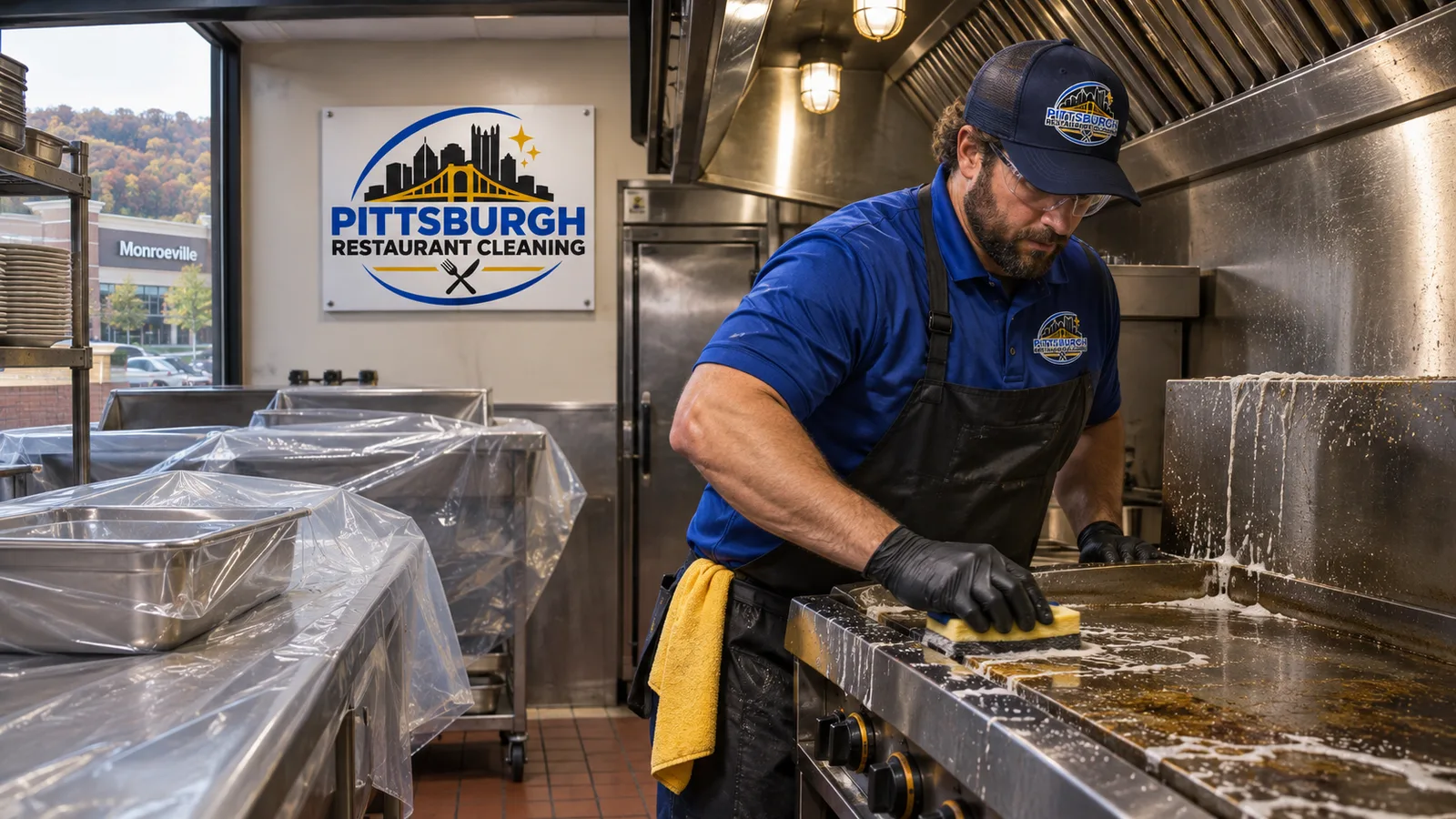
A cleaning professional degreasing stainless-steel cooking equipment in a Monroeville restaurant kitchen while nearby food-contact surfaces remain protected

Reliable Restaurant Cleaning Monroeville Operators Can Schedule Around Service

Restaurant Cleaning Monroeville should address the areas that routine closing duties cannot fully cover. Pittsburgh Restaurant Cleaning handles planned deep cleaning for commercial kitchens, food-preparation areas, storage spaces, dining rooms, and other working areas within a restaurant. The scope can target a single problem area or establish recurring care based on soil levels and operating demands.

Our work starts with a walkthrough and a written scope. We are Pittsburgh's restaurant service specialists who identify the surfaces and equipment included, discuss access and shutdown requirements, and determine which tasks must be completed after food is removed or protected. That preparation matters in busy operations where cleaners must work around staff schedules, hot equipment, and the next service period.

Monroeville restaurants near the commercial corridors along William Penn Highway may need overnight or off-hour work to avoid interfering with customer traffic. Kitchens serving nearby communities such as Pitcairn, Wilmerding, and Turtle Creek may have different service windows, but the same planning principle applies: cleaning should fit the operation rather than disrupt it. Pittsburgh Restaurant Cleaning is based at 2021 Tustin St, Suite 4 in Pittsburgh and serves Monroeville with locally coordinated restaurant care.

Request a Callback
Cleaning Scope

What a Restaurant Cleaning Scope Can Include

Request a Callback

Cooking Line and Equipment Exteriors

Degreasing can cover ranges, fryers, grills, ovens, hot-holding units, stainless panels, control surrounds, casters, legs, and accessible spaces beneath equipment. Equipment is handled according to its surface and condition.

Food-Preparation Areas

Worktables, sinks, backsplashes, shelving, washable walls, and other nonporous surfaces can be cleaned after food, utensils, and loose supplies are removed or protected. Cleaning and sanitizing are treated as separate steps.

Floors and Hard-to-Reach Edges

Grease and soil tend to collect along baseboards, beneath movable units, around floor mats, and near cooking stations. The cleaning method should match the floor material and avoid leaving slippery detergent residue.

Dining and Guest Areas

Dining-room floors, booths, table bases, ledges, entry areas, and other high-touch surfaces can be added to the scope. Front-of-house work is planned around furnishings and the restaurant's opening time.

Storage and Utility Spaces

Dry-storage floors, accessible shelving, waste-handling areas, and utility-room surfaces may require periodic cleaning to control residue and accumulated soil. Food and packaging must be protected throughout the work.

Scheduled Deep Cleaning

Recurring visits can focus on areas that build up grease between daily cleanings. Frequency is based on menu, cooking volume, equipment arrangement, hours, and the condition found during the walkthrough.

Restaurant Equipment Cleaning in Monroeville

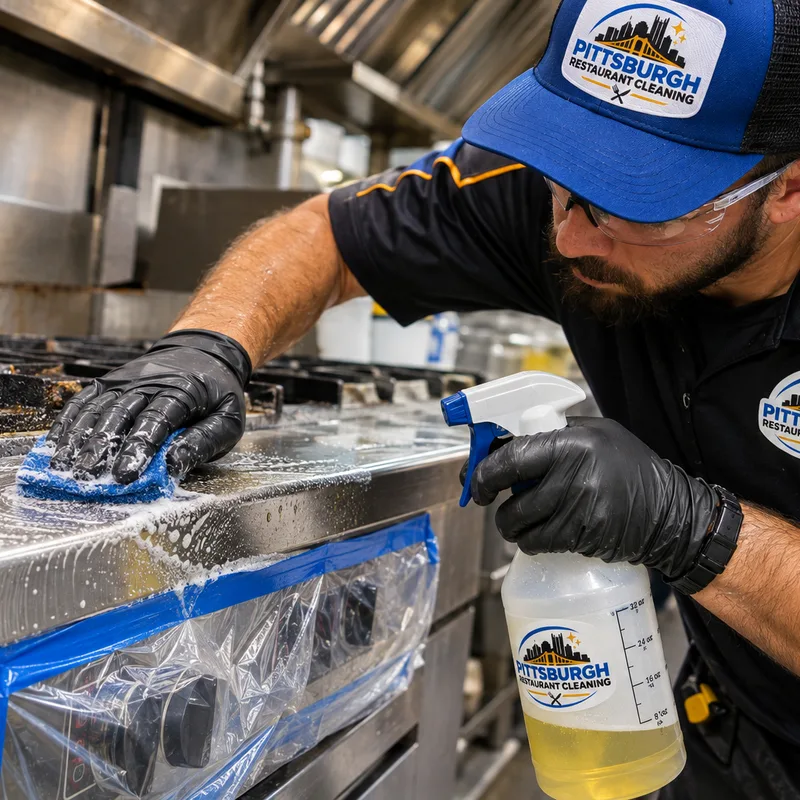
Close view of a trained cleaner using a non-scratch pad and measured degreaser on a cooled stainless-steel range, with electrical controls protected from moisture

Restaurant equipment needs more than a strong chemical and a quick rinse. Stainless steel, painted panels, aluminum components, rubber seals, glass, and controls can react differently to heat, moisture, abrasives, and alkaline degreasers. A responsible plan identifies the material, follows manufacturer care guidance when available, and uses the least aggressive method that will remove the soil.

Before work begins, equipment should be shut down, cooled, and isolated as appropriate. Loose debris is removed first. Degreaser is then given suitable dwell time so grease can release without needless scrubbing. Surfaces are agitated with compatible pads or brushes, rinsed or wiped as the equipment permits, and dried before the unit returns to use. Electrical connections, burners, pilot assemblies, controls, and ventilation components require special care and may fall outside a general cleaning scope.

Restaurant equipment cleaning in Monroeville can include accessible exterior and removable components, but cleaning does not replace mechanical maintenance or repair. The written scope should state whether crews will move equipment, remove racks or guards, clean underneath units, or address heavy carbon deposits. It should also identify any components that restaurant staff or a qualified equipment technician must disconnect.

Service Process

How Professional Restaurant Cleaning Works

  1. 01

    Walk Through the Restaurant

    The first visit establishes the restaurant's layout, soil conditions, equipment list, access limits, and operating schedule. Any sensitive surfaces, damaged finishes, or safety concerns should be documented before pricing.

  2. 02

    Define the Scope and Schedule

    The written scope lists included areas, exclusions, preparation duties, cleaning methods, and visit frequency. Timing is coordinated around deliveries, closing duties, food preparation, and the next opening.

  3. 03

    Prepare and Protect

    Food, utensils, single-use items, and exposed ingredients are removed or covered. Equipment is cooled when required, warning signs are placed, and nearby surfaces are protected against overspray or runoff.

  4. 04

    Clean in a Controlled Order

    Crews generally work from cleaner areas toward heavier soil and from higher surfaces toward floors. Chemicals receive their required dwell time, and incompatible products are never mixed.

  5. 05

    Inspect Before Turnover

    Included areas are checked against the agreed scope. Surfaces are left dry where practical, equipment components are returned to their agreed positions, and unresolved maintenance or access issues are reported.

Request a Callback

Cleaning, Sanitizing, and Food-Safe Practices

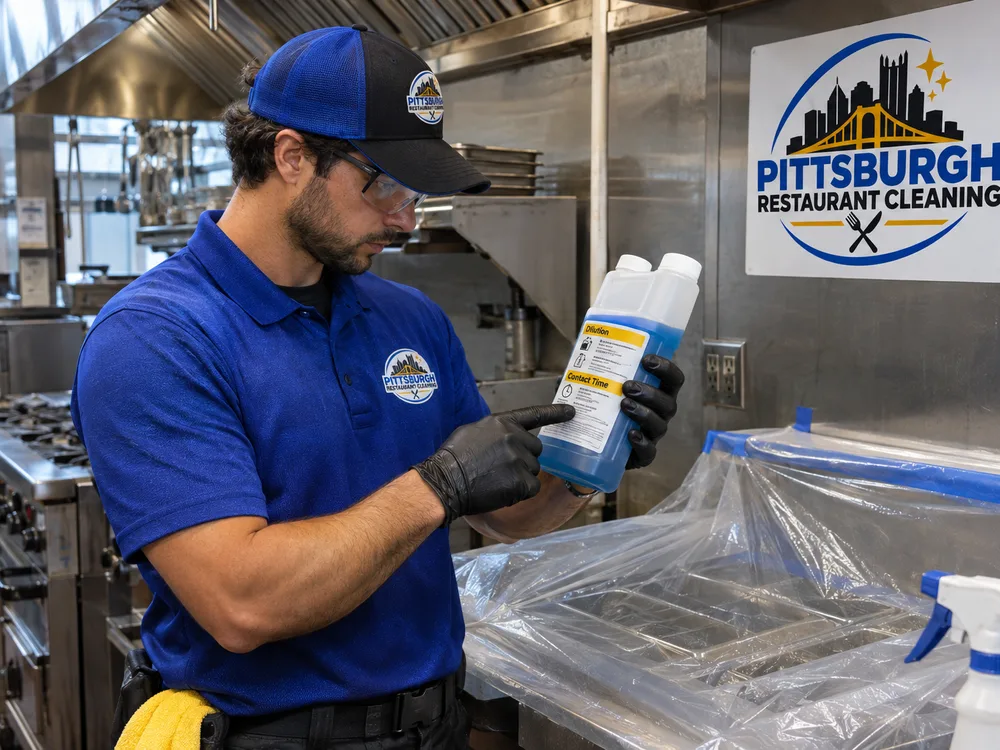
A restaurant cleaner checking labeled chemical dilution and contact-time instructions beside protected food-preparation surfaces in a commercial kitchen

Cleaning removes food residue, grease, and other soil. Sanitizing follows cleaning and reduces microorganisms on an already clean surface when the correct product, concentration, contact time, and application method are used. Applying sanitizer over grease or debris does not replace proper cleaning.

Products used around food-contact surfaces must be suitable for the intended application and used according to their labels. Crews should follow required dilution, contact time, rinsing directions, and personal protective equipment instructions. Chemical bottles must be labeled, and products such as chlorine-based cleaners and acids must never be mixed. Restaurants should also keep Safety Data Sheets accessible for workplace chemicals.

Professional cleaning supports the restaurant's food-safety program, but it does not transfer the operator's regulatory responsibilities to the cleaning company. Managers remain responsible for employee practices, temperature control, pest management, equipment condition, and compliance with applicable Allegheny County and Pennsylvania requirements. A good cleaning plan complements those duties with documented tasks and clear accountability.

Operational Planning

A Practical Plan for Monroeville Restaurant Operations

Restaurant layout and menu have a direct effect on cleaning labor. Frying and high-heat cooking create different residue than a café, bakery, bar, or cold-preparation operation. Tight cook lines take longer to access, especially when heavy units cannot be moved. Textured floors, grout lines, floor drains, wall junctions, and the undersides of shelving can also require more agitation than open stainless surfaces.

Western Pennsylvania weather adds a seasonal front-of-house concern. Winter precipitation can bring water, road salt, and abrasive grit through restaurant entrances. Entry mats, vestibules, and nearby hard floors may need more frequent attention during wet or snowy periods because tracked-in residue can damage finishes and create poor footing. This need is separate from kitchen degreasing and should be identified in the scope.

Frequency should follow actual use. A high-volume fry station may need frequent detail work, while walls, ceilings, storage shelving, or equipment undersides may fit a periodic rotation. Daily staff cleaning should continue between professional visits. The best recurring plan assigns each task to either restaurant staff or the cleaning crew so work is not missed or duplicated.

Request a Callback

How Much Does Restaurant Cleaning Cost in Monroeville?

Restaurant cleaning in Monroeville typically costs about $300 to $900 per deep-cleaning visit for a smaller operation, while large kitchens or heavy grease and carbon buildup may run $1,000 to $3,000 or more. These are general planning ranges, not fixed quotes.

Final pricing depends on kitchen size, equipment count, soil level, floor type, access, crew hours, visit frequency, and whether equipment must be moved or disassembled. A walkthrough confirms included tasks, exclusions, preparation requirements, and the exact cost before service.

Request a Callback

A detailed walkthrough turns problem areas, equipment concerns, and scheduling limits into a written cleaning scope that your staff can plan around.

Call for a Free Quote
Practical Answers

Restaurant Cleaning Monroeville FAQs

Can restaurant cleaning be scheduled after closing?

Yes, restaurant cleaning can usually be planned after closing or during another low-activity period. The right window depends on staff departure, equipment cool-down time, building access, alarm procedures, and when food preparation resumes. Monroeville operations with late service should allow enough time for cleaning, required chemical contact time, drying, and a final inspection before the next shift.

How often should a Monroeville restaurant schedule deep cleaning?

Deep-cleaning frequency should be based on cooking volume, menu, operating hours, equipment layout, and the rate at which grease accumulates. Fry stations and busy cook lines may need attention more often than storage walls or equipment undersides. A walkthrough can separate daily staff tasks from weekly, monthly, or condition-based professional work.

Does restaurant equipment cleaning include taking appliances apart?

Only the disassembly stated in the written scope is included. Removable racks, trays, filters, guards, or panels may be addressed when they can be safely handled and the manufacturer permits it. Gas, electrical, refrigeration, and mechanical components should be disconnected or serviced by qualified personnel when the work goes beyond ordinary cleaning access.

Will the restaurant need to close during cleaning?

The restaurant may not need to lose a full service period, but the work area must be separated from food preparation and customer activity. Heavy degreasing, wet floor work, and equipment cleaning are normally scheduled when affected areas are out of use. The walkthrough identifies which zones require shutdown and how long they need for cleaning and drying.

What should staff do before the cleaning crew arrives?

Staff should remove or securely protect food, utensils, paper goods, and personal items from the agreed work area. Equipment may need to be emptied, shut down, and cooled. The preparation list should also cover keys, alarm access, movable equipment, waste disposal, and a manager contact for questions during off-hour work.

Can cleaning remove every grease stain and carbon deposit?

No, some discoloration or carbon may be permanent or unsafe to remove without damaging the surface. Heat can alter stainless steel, aggressive scrubbing can scratch finishes, and old grease may penetrate porous grout or worn coatings. The pre-service assessment identifies likely limitations and recommends a test area when surface compatibility is uncertain.

Does professional restaurant cleaning guarantee a health inspection result?

No cleaning company can guarantee an inspection outcome. Professional cleaning can address the agreed sanitation and soil-removal tasks, while the restaurant remains responsible for food handling, temperatures, employee hygiene, pest control, maintenance, records, and other applicable requirements in Allegheny County and Pennsylvania.
Plan a Cleaner Restaurant Without Disrupting Service

Tell Pittsburgh Restaurant Cleaning about your kitchen, equipment, operating hours, and problem areas. We will help define a practical scope and scheduling plan for your Monroeville restaurant.