Restaurant Cleaning · West Mifflin

Restaurant Cleaning Services in West Mifflin

Keep your kitchen, dining room, restrooms, and customer touchpoints ready for the next service with a cleaning plan built around your hours and facility.

Kitchens & dining rooms Restrooms & entrances Surface-specific methods West Mifflin service
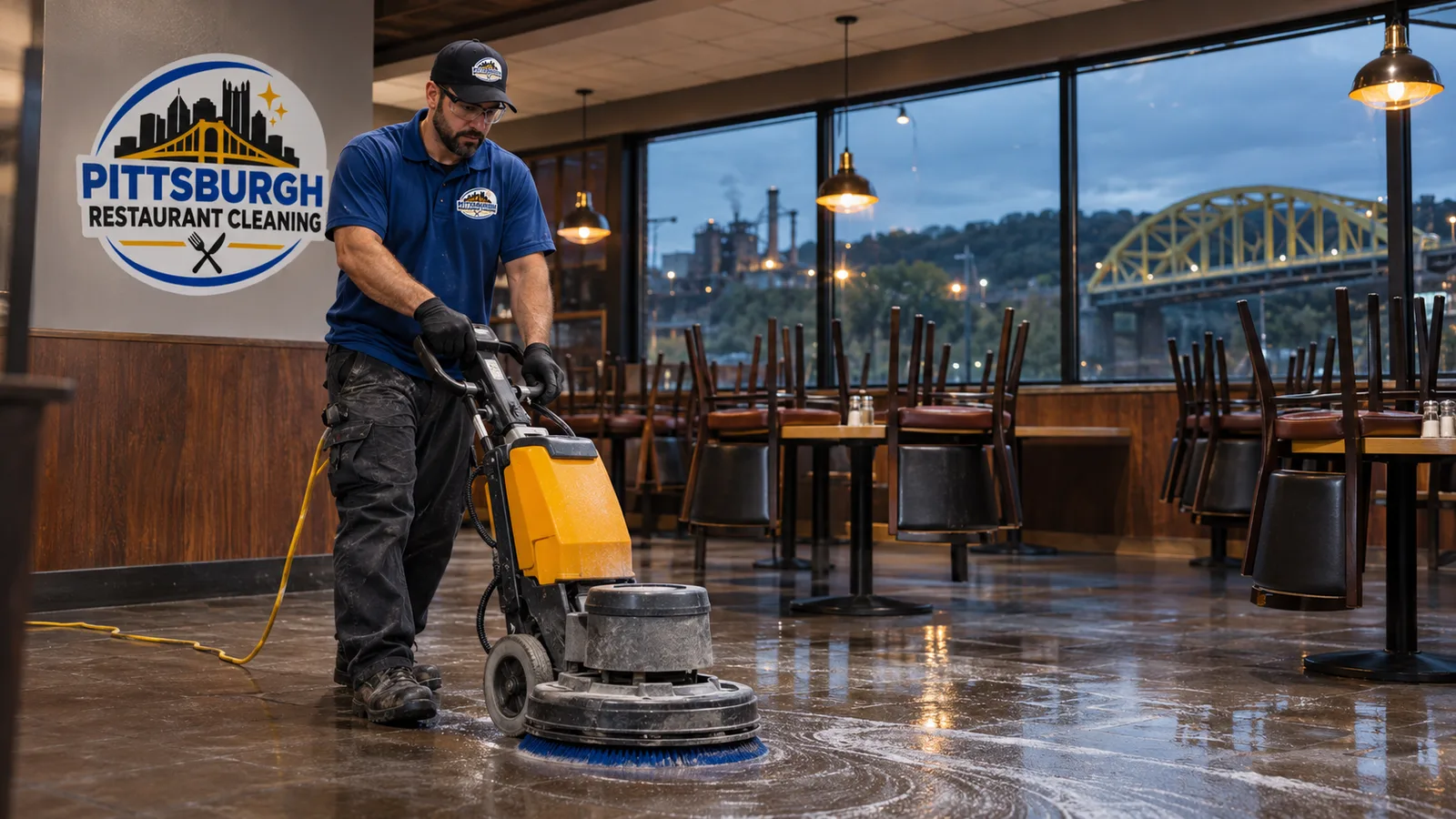
A professional cleaner using commercial equipment on the floor of a West Mifflin restaurant dining room after closing

Dependable Restaurant Cleaning in West Mifflin

Restaurant Cleaning West Mifflin should support daily operations rather than interfere with them. Pittsburgh Restaurant Cleaning develops scopes around each facility's layout, hours, surface materials, cooking volume, and areas of concern. Work may be scheduled after closing, before opening, or during another agreed service window.

We approach each job as Pittsburgh's local restaurant service with a practical plan for kitchens, dining rooms, restrooms, entry areas, and employee spaces. Each proposal identifies the rooms and tasks included, the expected frequency, and any periodic detail work. This makes it easier for owners and managers to compare the cleaning plan with the work their employees already perform.

West Mifflin restaurants face the familiar demands of southwestern Pennsylvania weather. Rain, winter slush, and deicing residue can move quickly through an entrance and onto hard floors. A sound plan accounts for that soil load with entrance attention, appropriate floor chemistry, and seasonal adjustments instead of treating every visit exactly the same.

Request a Callback

Cleaning Built Around Food-Service Operations

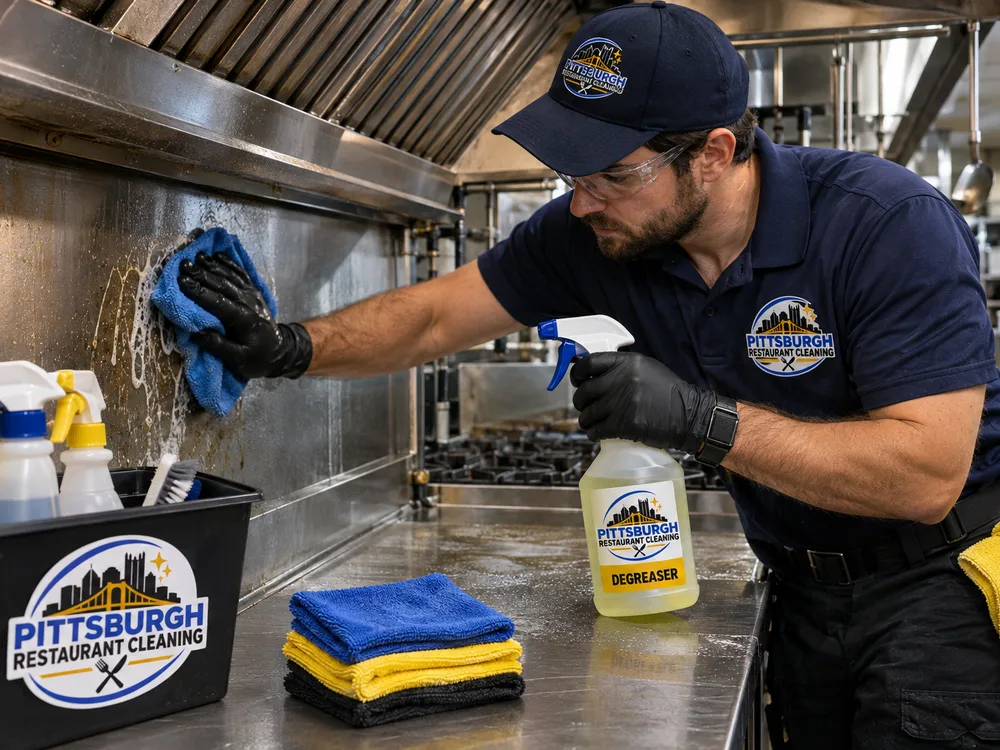
A trained cleaner degreasing an accessible commercial kitchen surface with labeled supplies, color-separated cloths, and nearby food items removed

A restaurant contains several cleaning environments under one roof. The dining room requires careful dust removal, spot cleaning, floor care, and attention to guest touchpoints. Restrooms need separate tools and a defined disinfection routine. Back-of-house work may involve degreasing washable surfaces, cleaning floors under accessible equipment, and removing buildup around edges, corners, and floor drains.

Our team separates cleaning tools by area to reduce cross-contamination. Cleaners follow product labels for dilution, surface compatibility, dwell time, and required rinsing. Food-contact surfaces require particular care: cleaning removes soil, while sanitizing follows with an approved product used according to its label. These are distinct steps.

The scope can also address areas that routine shift work may miss, such as chair legs, baseboards, partitions, door plates, kick plates, ledges, and accessible spaces beneath movable fixtures. We coordinate those tasks with the restaurant's closing procedures and access requirements.

Service Scope

What Restaurant Cleaning Services in West Mifflin Can Cover

Request a Callback

Commercial Kitchen Cleaning

Cleaning plans may include washable prep-area surfaces, accessible equipment exteriors, splash areas, floors, edges, floor drains, and grease-prone zones. The exact scope identifies what must be cooled, moved, or cleared by restaurant staff before work begins.

Dining Room Care

Tables, seating, partitions, ledges, baseboards, and hard floors receive attention based on their material and condition. High-touch points such as door handles and payment-area surfaces can be included where access permits.

Floor Cleaning

Vacuuming, mopping, scrubbing, spot treatment, and periodic machine work are matched to tile, resilient flooring, sealed concrete, or carpet. Degreaser strength and rinse procedures are selected to avoid leaving slippery residue.

Restrooms and Employee Areas

Restroom work can include fixtures, partitions, dispensers, mirrors, floors, touchpoints, and waste removal. Separate cloths, tools, and chemical controls keep restroom cleaning apart from kitchen and dining areas.

Entrances and Customer Touchpoints

Entry glass, doors, vestibules, mats, host stations, and other frequently handled surfaces can be added to the recurring plan. These areas may need extra attention during wet or snowy weather.

Scheduled Detail Work

Periodic cleaning can address buildup on edges, wall protection, reachable vents, furniture bases, and other specified surfaces. Recurring and detail tasks are documented separately so responsibilities remain clear.

Service Process

How We Set Up a Restaurant Cleaning Plan

  1. 01

    Walk Through the Facility

    We review the kitchen, dining room, restrooms, entry, storage access, floor types, and cleaning challenges. The walkthrough also identifies alarm procedures, key control, parking or loading limits, and the hours when crews can work safely.

  2. 02

    Define the Scope

    The written scope lists included areas, task frequency, periodic work, exclusions, and restaurant preparation requirements. It also clarifies who handles consumables, waste placement, equipment movement, and access to locked rooms.

  3. 03

    Plan Safe Product Use

    Cleaning methods are matched to the soil and material. Product labels determine dilution, dwell time, personal protective equipment, ventilation, rinsing, and whether a product is appropriate around food-service surfaces.

  4. 04

    Schedule the Work

    Service is placed within an agreed window that fits opening, closing, delivery, and food-preparation schedules. The first visits establish practical timing and reveal any access issues that need correction.

  5. 05

    Review and Adjust

    Managers can report missed details, changing traffic, seasonal floor issues, or new priorities. The scope can then be adjusted so recurring service continues to match actual restaurant conditions.

Request a Callback

Floor and Grease Control for West Mifflin Restaurants

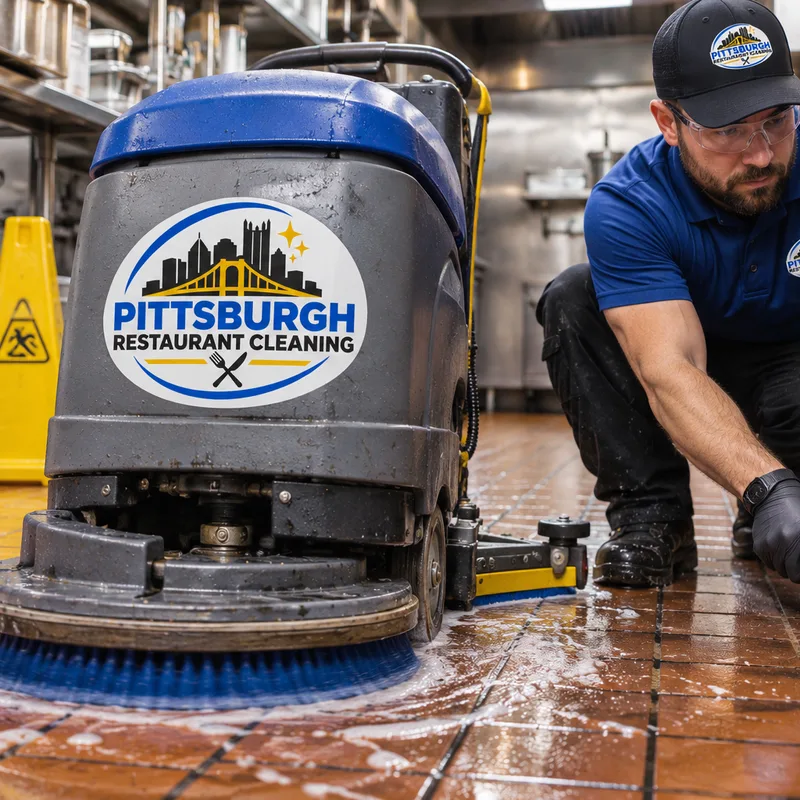
Close view of a commercial floor scrubber cleaning a restaurant's tiled kitchen floor, with wet-floor controls and edges prepared for detail cleaning

Kitchen floors collect fats, oils, food particles, and detergent residue. Effective cleaning starts with dry soil removal, followed by the correct solution, mechanical agitation where suitable, and thorough recovery or rinsing. Using more chemical than the label allows can leave residue rather than improve the result.

Front-of-house floors have different demands. Abrasive grit carried through an entrance can scratch finishes, while winter moisture and deicing residue can create visible film. Mat areas, vestibules, and main traffic lanes may therefore need a different frequency than protected corners of the dining room.

Surface identification matters. Quarry tile, grout, luxury vinyl tile, sealed concrete, and carpet do not accept the same chemistry or equipment. Before periodic floor work, we confirm the material and assess worn finishes, loose grout, damaged transitions, and other conditions that cleaning cannot repair.

Operational Planning

A Clear Scope Protects Daily Operations

Restaurant cleaning works best when responsibilities are written down. Employees may wipe food-contact surfaces throughout a shift, manage immediate spills, and complete closing duties, while a contracted crew handles the recurring tasks assigned in its scope. Clear boundaries reduce duplicated work and prevent important areas from being assumed rather than assigned.

Before service, food and single-use items should be protected or removed from the active work zone. Hot equipment must have enough time to cool when the agreed task requires nearby access. Cleaners should never operate, dismantle, or move equipment unless that work is specifically authorized and safe. Exhaust-system cleaning, pest control, hazardous-material response, and equipment repair are separate specialties and should be assigned to qualified providers when needed.

Our Pittsburgh address provides a practical base for serving West Mifflin businesses. Local scheduling must account for restaurant hours, crew access, and travel conditions across the Monongahela Valley, particularly during winter weather. We confirm the workable service window before the schedule begins.

Request a Callback

Get a written cleaning scope that identifies the rooms, tasks, frequency, service window, and preparation requirements before recurring work starts.

Call for a Free Quote
Practical Answers

Restaurant Cleaning West Mifflin FAQs

How much does restaurant cleaning cost in West Mifflin?

Restaurant cleaning is generally priced after a facility walkthrough because square footage alone does not show the labor involved. Cost depends on kitchen grease levels, floor materials, restroom count, cleaning frequency, access, service hours, and whether periodic machine work is included. A written proposal should separate recurring duties from one-time detail cleaning and confirm the price for the agreed scope.

Can cleaning be scheduled after our restaurant closes?

Yes, after-hours cleaning can be arranged when staffing and facility access allow. The plan should state the arrival window, alarm or key procedure, closing duties that employees must complete, and the time by which the crew must leave before food preparation resumes.

Do you provide nightly restaurant cleaning services in West Mifflin?

Service frequency is based on the restaurant's needs and available schedule, with recurring plans potentially arranged for multiple visits per week or other agreed intervals. High-volume kitchens and heavily used restrooms may require more frequent work than offices, storage rooms, or periodic detail areas. Availability is confirmed during scheduling.

What must restaurant staff do before the cleaning crew arrives?

Restaurant staff should complete the preparation listed in the scope, which may include securing food, clearing designated counters, cooling equipment, moving approved small items, and providing access to assigned rooms. Staff should also report spills, broken glass, equipment leaks, or unusual hazards before cleaning begins.

Are food-contact surfaces cleaned and sanitized?

Food-contact surfaces can be included when the scope clearly assigns them and the correct products and procedures are established. Cleaning removes food and soil first; sanitizing is a separate step that requires an appropriate product, correct concentration, full label dwell time, and any specified rinse.

Can you remove heavy grease from a commercial kitchen?

Heavy grease can often be reduced through planned degreasing, agitation, detail work, and repeated maintenance, but the result depends on the surface and the depth of buildup. Painted finishes, deteriorated grout, damaged sealants, and inaccessible equipment spaces may limit cleaning. The walkthrough identifies what is cleanable and whether specialized exhaust or equipment service is needed.

Can the cleaning plan change during winter?

Yes, the plan can be adjusted when winter moisture, grit, and deicing residue increase the soil entering the restaurant. West Mifflin facilities may benefit from more frequent vestibule, mat, and traffic-lane care during wet or snowy periods, while preserving the regular kitchen and restroom schedule.
Ready for a Cleaner West Mifflin Restaurant?

Tell Pittsburgh Restaurant Cleaning about your facility, operating hours, floor types, and problem areas. We will discuss the work, assess access requirements, and prepare a clear scope for your restaurant.