Restaurant Cleaning · Pittsburgh

Restaurant Cleaning Company

Detailed kitchen, cooler, dining-area, and high-surface cleaning planned around your operating schedule and the condition of your facility.

Kitchen deep cleaning Walk-in coolers High dusting Written scope
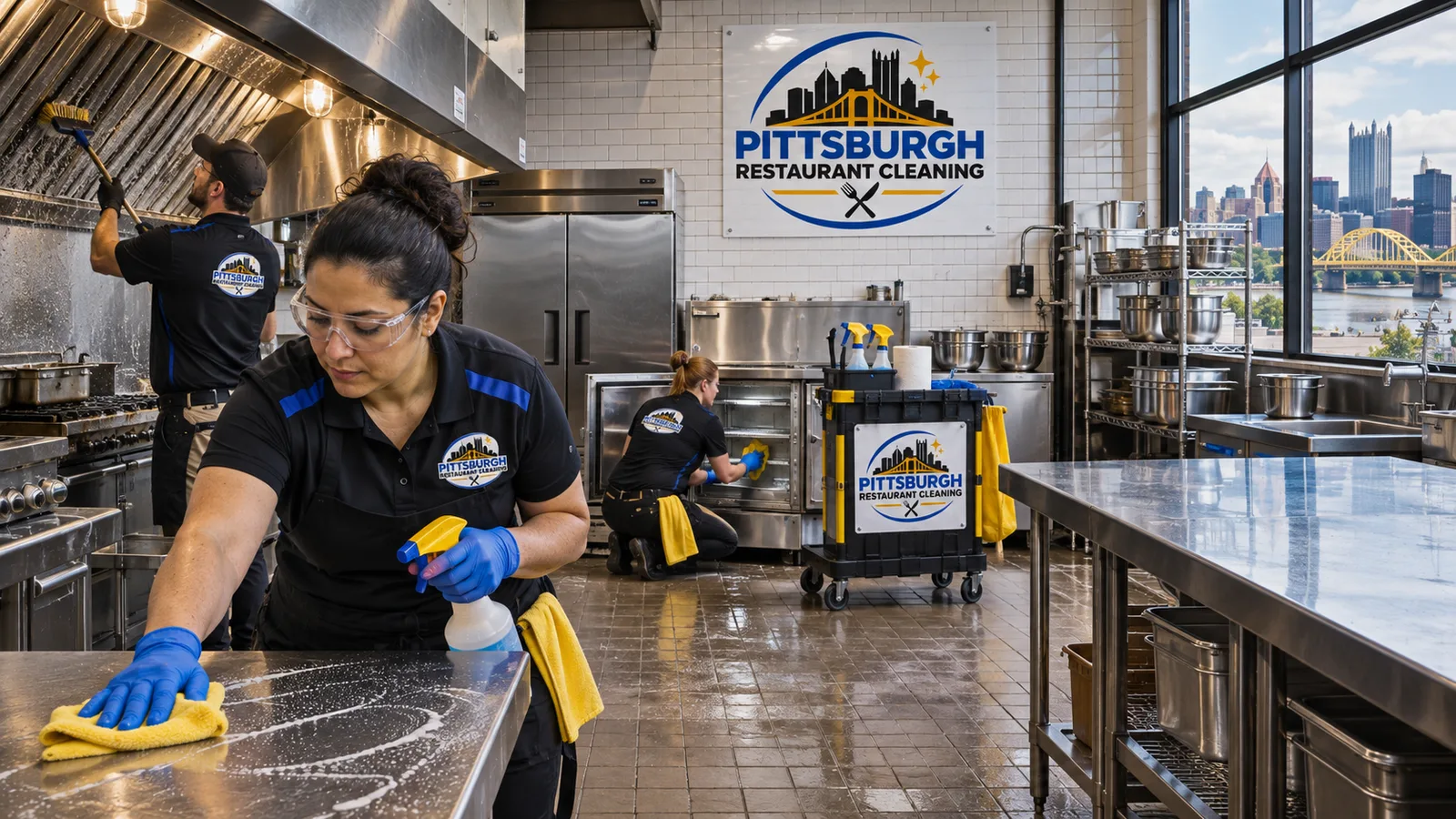
A trained restaurant cleaning crew performing detailed work in a Pittsburgh commercial kitchen with stainless steel equipment, tiled walls, and protected food-contact surfaces

A Restaurant Cleaning Company for Detailed, Scheduled Work

Pittsburgh Restaurant Cleaning provides restaurant deep cleaning services for commercial kitchens, walk-in coolers, storage areas, dining spaces, and difficult overhead surfaces. Each job starts with the facility itself: its equipment layout, soil conditions, access limits, operating hours, and priority areas. That produces a written scope that your manager can review before work begins.

Our crews work methodically around fixed equipment and sensitive surfaces. Grease, carbonized residue, food debris, dust, and buildup require different tools and chemicals. Stainless steel, quarry tile, sealed flooring, washable wall panels, and refrigeration components also need surface-appropriate methods. We follow product dwell times, separate tools by cleaning zone, and avoid applying chemicals to surfaces or components for which they are not intended.

Pittsburgh Restaurant Cleaning is a restaurant service company Pittsburgh homeowners rely on, bringing the same careful scoping and dependable communication to commercial food-service facilities. Restaurants in the Strip District may need work planned around deliveries and daytime trade, while South Side operations often require access coordinated around late closing times. In Downtown Pittsburgh, loading access, elevators, and building rules can affect crew setup. These details belong in the plan, not in last-minute assumptions.

Request a Callback
Cleaning Scope

Restaurant Deep Cleaning Services

Kitchen Deep Cleaning

Detailed cleaning can address floors, walls, baseboards, equipment exteriors, prep-area surroundings, shelving, sinks, splash zones, and accessible spaces under or behind movable equipment. The scope identifies which items staff will move and which require special handling.

Walk-In Cooler Cleaning

Walk-in cooler cleaning covers accessible floors, walls, shelving, door surfaces, gaskets, and visible residue according to the agreed scope. Food and loose inventory must be removed, protected, or repositioned before cleaning starts.

High Dusting

High dusting in Pittsburgh restaurants targets accessible ledges, pipes, vents, light housings, ceiling edges, and other overhead surfaces where settled dust can accumulate. Access height and the presence of active equipment determine the tools and containment plan.

Dining and Service Areas

Restaurant detailed cleaning may include washable walls, hard floors, baseboards, booths, chair frames, service stations, entry glass, and other agreed surfaces. Materials are checked before chemical or mechanical cleaning begins.

Storage and Back-of-House Areas

Dry-storage floors, shelving exteriors, utility spaces, and staff areas can be included when access is clear. Cleaning is sequenced to reduce cross-contamination between food-preparation, storage, and non-food zones.

Focused Corrective Cleaning

A focused visit can target defined problem areas after equipment work, a maintenance shutdown, seasonal buildup, or a change in operations. The estimate separates included tasks from exclusions so managers can approve the right scope.

Request a Callback

Commercial Kitchen Deep Cleaning in Pittsburgh

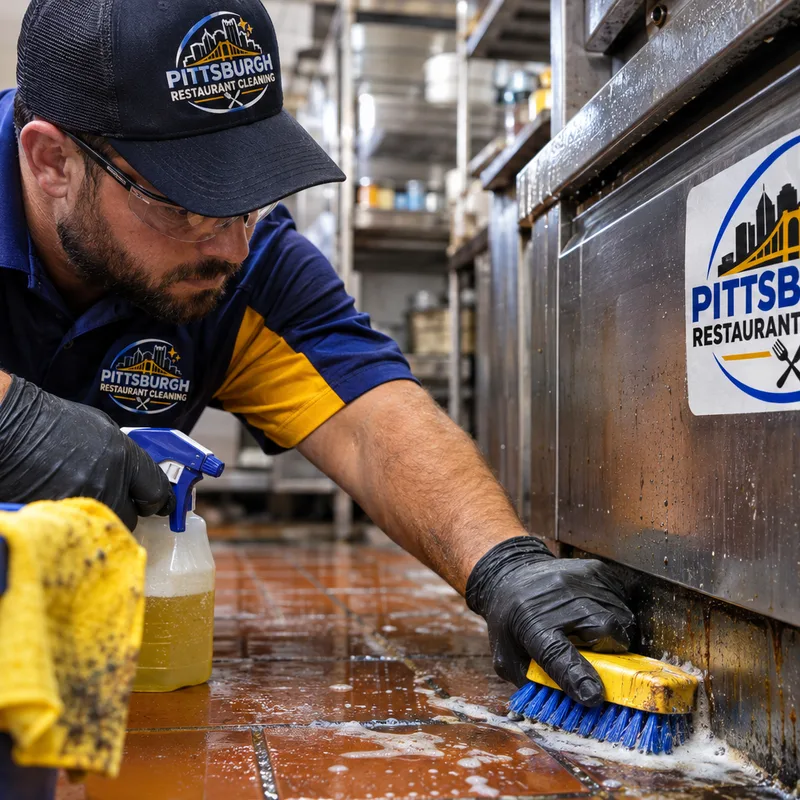
Close view of a restaurant cleaner removing grease buildup from accessible stainless steel equipment exteriors and the floor-wall edge using commercial tools
Surface-compatible products and controlled agitation help remove buildup without treating every material the same.

Professional restaurant deep cleaning starts with safe access. The crew confirms shut-down requirements, checks whether equipment is cool, identifies electrical or gas-related restrictions, and protects nearby food-contact surfaces. Cleaning then proceeds by zone so loosened soil is not carried back into finished areas.

Degreasing is a process rather than a single spray-and-wipe step. Heavy residue may require dry removal, application of a compatible degreaser, the specified dwell time, controlled agitation, and removal of the spent solution. Rinsing or neutralization depends on the product and surface. Final detailing includes edges, joints, casters, legs, and accessible floor-wall transitions that routine cleaning may miss.

Commercial kitchen cleaning does not replace specialized exhaust-system service, pest control, equipment repair, or legally required inspections. Hood interiors, ducts, fans, fire-suppression components, energized equipment, and inaccessible refrigeration components need appropriately qualified providers. Pittsburgh Restaurant Cleaning defines these boundaries during scoping so the crew can concentrate on the approved deep-cleaning work.

Service Process

How Professional Restaurant Deep Cleaning Works

  1. 01

    Facility Walkthrough and Priorities

    We review the kitchen, cooler, storage, dining, and overhead areas included in the request. Access constraints, operating hours, known trouble spots, sensitive finishes, and equipment restrictions are recorded.

  2. 02

    Written Scope and Scheduling

    The proposed scope identifies included surfaces, exclusions, preparation responsibilities, and expected access. Scheduling considers closing time, deliveries, building access, ventilation, and the time needed for surfaces to dry before normal use resumes.

  3. 03

    Preparation and Zone Setup

    The crew confirms that food, utensils, smallwares, and movable inventory are removed or protected as agreed. Work zones are set up to control tools, chemical use, foot traffic, and movement between soil levels.

  4. 04

    Deep Cleaning and Detailing

    Restaurant deep cleaners follow the planned sequence, using methods appropriate for grease, dust, food residue, and the material being cleaned. Supervisors monitor progress and flag concealed damage or access problems rather than cleaning around them without explanation.

  5. 05

    Review and Closeout

    Completed areas are checked against the approved scope. The manager can review notable conditions, restricted areas, and any maintenance issue discovered during cleaning before the facility returns to normal operation.

Request a Callback

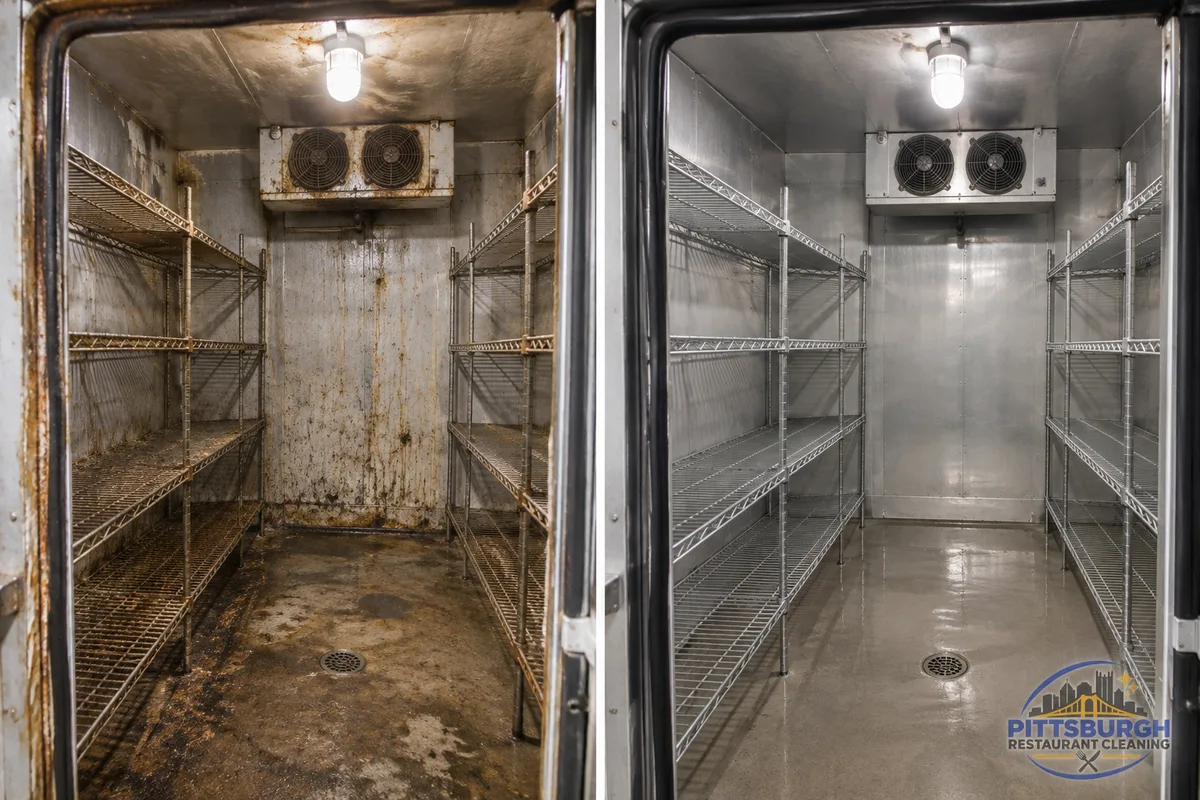
Walk-In Cooler Cleaning Requires Careful Preparation

A realistic side-by-side view of the same restaurant walk-in cooler before and after detailed cleaning, with inventory removed and shelving, walls, door gasket, and floor clearly visible
Clear access lets the crew reach shelves, edges, thresholds, and floor areas that stocked coolers conceal.

A walk-in cooler should be prepared before detailed cleaning begins. Inventory must be removed, securely protected, or shifted according to a plan that preserves safe holding conditions. The cleaning scope may include accessible shelving, walls, floors, door surfaces, thresholds, and gaskets. Evaporator coils, fans, electrical components, refrigerant equipment, and internal mechanical work are excluded unless handled by a qualified refrigeration professional.

Standing water is a particular concern in a cold room. Crews must control the amount of solution used, keep drains clear where present, and avoid directing moisture into electrical or mechanical components. Products must be compatible with the surface and appropriate for the intended area. A manager should also allow enough time for cleaning, removal of residue, drying, and orderly restocking.

If visible growth, damaged seals, recurring condensation, loose flooring, or a persistent odor is found, cleaning may improve the surface condition but will not repair the source. Those findings should be documented for building maintenance, refrigeration service, or another qualified trade.

Overhead Cleaning

High Dusting for Pittsburgh Restaurants

High dusting removes settled material from accessible overhead surfaces such as pipes, ledges, structural members, vent exteriors, ceiling edges, and light housings. The method depends on height, surface condition, nearby food-contact areas, and whether dust can be captured directly. HEPA-filtered vacuuming and controlled wiping are often preferable to methods that scatter debris through the room.

Older commercial buildings in areas such as the Strip District and South Side can have exposed utilities, tall ceilings, and tight service corridors. Downtown properties may add elevator reservations or building access rules. None of these conditions changes the cleaning objective, but each affects ladders, extension tools, containment, crew movement, and scheduling.

Overhead work should occur before final cleaning of lower surfaces and floors. When performed in the reverse order, falling material can contaminate completed areas. Greasy overhead residue may also need a different process than dry dust, especially near cooking lines. During Pittsburgh winters, tracked salt and wet soil can add floor work near receiving doors and entrances, so the final sequence should account for exterior traffic as well as overhead debris.

Request a Callback
Why Choose This Team

Why Managers Choose Pittsburgh Restaurant Cleaning

Scope Before Work

Managers receive a clear description of the planned areas, preparation needs, and exclusions. This helps prevent disagreements about equipment interiors, fixed installations, specialized systems, or inaccessible surfaces.

Scheduling Around Operations

Cleaning can be planned around closing periods, prep schedules, deliveries, and building access. The realistic window includes setup, dwell time, detail work, inspection, and drying.

Methods Matched to the Surface

A professional restaurant cleaning company distinguishes stainless steel from aluminum, sealed floors from damaged grout, and washable walls from finishes that need gentler treatment.

Attention to Cross-Contamination

Tools and work sequences are organized by zone. Food-contact items should be removed or protected, and approved sanitation procedures remain separate from general soil removal where the scope requires both.

Straightforward Communication

If blocked access, damaged materials, unsafe conditions, or out-of-scope systems prevent completion, the issue is reported. The team does not conceal a maintenance problem with a cosmetic cleaning pass.

Request a Callback

Get a written cleaning scope built around your facility, operating hours, priority areas, and access requirements before work is scheduled.

Call for a Free Quote
Practical Answers

Restaurant Cleaning Questions

How much do restaurant deep cleaning services cost in Pittsburgh?

Restaurant deep-cleaning prices depend on square footage, grease level, equipment density, access, crew hours, and the number of areas included. A focused cooler or kitchen-zone cleaning costs less than a full back-of-house and dining-area project. High ceilings, overnight scheduling, heavy carbonized residue, and equipment that must be moved can increase labor. Pittsburgh Restaurant Cleaning confirms exact pricing after reviewing the facility and preparing a written scope.

How long does a kitchen deep cleaning take?

A focused kitchen deep cleaning may fit within one closed period, while a larger or heavily soiled facility can require multiple shifts. The schedule depends on preparation, equipment access, chemical dwell time, overhead work, detailing, and drying. Deliveries and reopening deadlines also matter, particularly in Downtown buildings where loading access or elevators may be restricted.

Can the crew clean while our restaurant is open?

Some isolated areas may be suitable for cleaning during limited operations, but deep work around active food preparation usually requires a closed or fully separated zone. Grease removal, high dusting, wet-floor work, and equipment access can interfere with safe production. The walkthrough determines whether phased work is practical or an after-hours schedule is the safer choice.

What must we do before walk-in cooler cleaning?

You should remove or securely protect food, loose inventory, containers, and small items before walk-in cooler cleaning begins. Staff should identify products that must remain under controlled temperatures and arrange temporary storage when needed. The crew also needs clear floor and shelf access, plus notice of damaged gaskets, drainage issues, or refrigeration problems.

Does restaurant detailed cleaning include the hood and exhaust ducts?

General restaurant detailed cleaning does not automatically include internal hood ducts, exhaust fans, fire-suppression equipment, or other specialized systems. Accessible exterior surfaces may be included when listed in the scope. Internal exhaust-system cleaning and fire-system work should be completed by properly qualified providers, with service requirements confirmed for the specific equipment and property.

Can you remove every stain, odor, or discoloration?

Cleaning can remove many soils and residues, but it cannot guarantee removal of permanent staining, corrosion, etched finishes, damaged grout, mold within porous materials, or odors caused by an active leak or mechanical defect. During the initial review, the team identifies visible conditions that may require repair, replacement, pest control, or refrigeration service.

How often should a Pittsburgh restaurant schedule professional deep cleaning?

The right frequency is based on cooking volume, menu, grease production, foot traffic, housekeeping routines, and the condition of hard-to-reach areas. Frying operations and facilities with exposed overhead surfaces may need focused work more often than low-grease kitchens. A walkthrough can establish a practical recurring scope without duplicating tasks already handled by staff.
Plan Your Restaurant Deep Cleaning

Tell Pittsburgh Restaurant Cleaning about the areas causing concern, your operating schedule, and any access restrictions. We will help define the work and prepare a clear scope for your facility.