Cooking Grease and Oily Film
Restaurant floor degreasing loosens fats and oils that have bonded with soil. Chemistry, dwell time, water control, and agitation are adjusted to the floor rather than relying on a stronger chemical alone.
Serving Pittsburgh, Pennsylvania & surrounding areas
Remove grease, embedded soil, and residue from restaurant tile and grout with a cleaning plan built around your kitchen's surface, condition, and operating schedule.
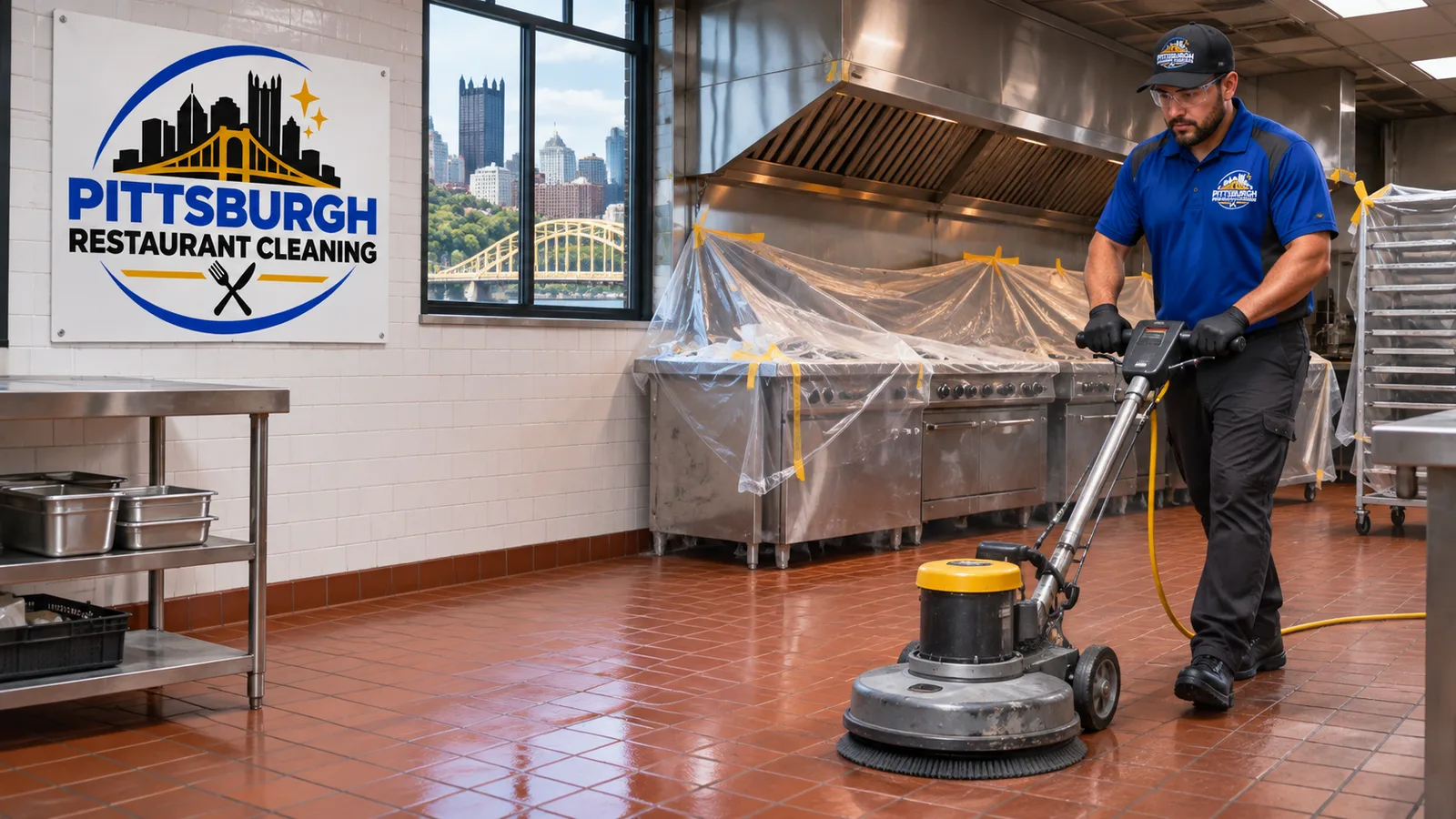
Commercial Kitchen Floor Cleaning tackles the greasy film and compacted soil that ordinary mopping can leave on tile, grout, edges, and traffic lanes. Kitchens add cooking oils, food residue, tracked-in grit, and detergent buildup to the floor throughout the day. Once that mixture settles into textured tile or porous grout, another pass with a mop often spreads it rather than removing it.
Pittsburgh Restaurant Cleaning provides planned floor care for restaurants and other commercial food-preparation spaces. Our restaurant service specialists serving Pittsburgh, PA assess the floor material, buildup, equipment layout, drainage, and available service window before selecting the cleaning method. The goal is a practical scope that addresses the floor's actual condition without disrupting more of the kitchen than necessary.
Local operating conditions matter. Restaurants in the Strip District often manage active receiving areas and steady food-service traffic, while Downtown kitchens may have tight loading access and limited overnight windows. South Side businesses can face heavy late-night traffic, and Oakland restaurants frequently work around university-driven meal periods. In winter, moisture and deicing residue tracked through entrances can add another layer of soil to nearby kitchen traffic lanes. These details affect access, scheduling, and where cleaning effort is concentrated.
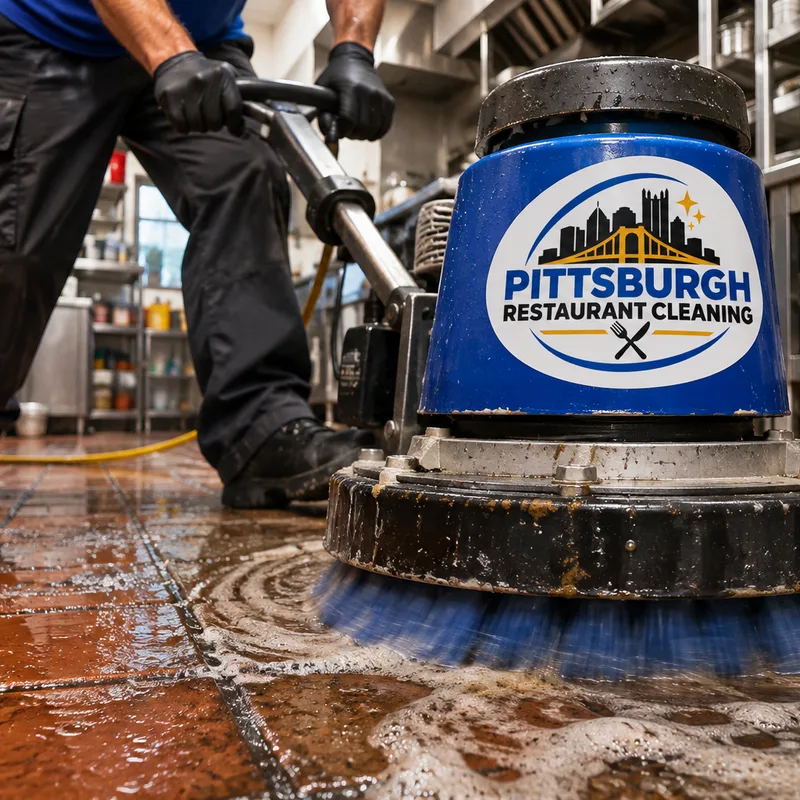
Restaurant tile cleaning starts with identifying the surface. Quarry tile and ceramic tile are common in commercial kitchens, but finishes, grout condition, previous coatings, and chemical sensitivity vary. The cleaning agent and agitation method must suit the floor. Using an excessively aggressive chemical or abrasive tool can damage grout, affect a finish, or leave a difficult residue.
A typical deep clean uses controlled dilution of a commercial degreaser, dwell time that allows the chemistry to work, mechanical agitation, and recovery of the suspended soil. Grout lines, wall edges, corners, kick plates, and spaces around fixed equipment may need focused hand work. A wet vacuum or extraction system removes dirty solution rather than allowing it to settle back into low points and joints. The floor is then rinsed as needed so cleaning residue does not become the next source of film.
Restaurant grout cleaning can improve the appearance of darkened joints, but cleaning cannot repair cracked, missing, or deeply deteriorated grout. Those conditions should be identified during the assessment so cleaning expectations remain realistic. Any damaged surface that can retain moisture or soil may require repair by an appropriate trade.
Restaurant floor degreasing loosens fats and oils that have bonded with soil. Chemistry, dwell time, water control, and agitation are adjusted to the floor rather than relying on a stronger chemical alone.
Targeted agitation lifts removable soil from porous grout and recessed joints. Existing stains, failed grout, and permanent discoloration are documented rather than hidden behind unrealistic promises.
Buildup often collects where mops do not make full contact, including corners, toe kicks, thresholds, and accessible equipment edges. These areas receive separate attention.
Routes between storage, preparation, cooking, dishwashing, and service areas receive repeated foot traffic. Cleaning can be concentrated where soil is most compacted.
Overuse of cleaner or incomplete recovery can leave a film that attracts soil. Controlled rinsing and extraction help remove both loosened buildup and spent cleaning solution.
Recurring service can be planned around the kitchen's operating hours, floor condition, and soil load. Frequency should be based on inspection rather than a generic calendar.
We review the tile or other hard flooring, grout condition, grease concentration, drains, thresholds, equipment clearances, water access, and recovery route. The inspection also identifies damaged joints or coatings that may limit the result.
The cleaning area, access requirements, equipment responsibilities, and expected downtime are confirmed before work begins. Service may be arranged after closing, before preparation starts, or during another planned shutdown when scheduling permits.
Loose food particles and dry soil are removed before wet cleaning. Movable items included in the agreed scope are cleared, sensitive areas are protected, and warning controls are placed around the work zone.
A compatible cleaner is applied at the appropriate dilution and given controlled dwell time. Mechanical agitation works the solution across textured tile and grout, with detailed cleaning at edges and other difficult areas.
Suspended soil and cleaning solution are recovered with suitable commercial equipment. The surface is rinsed when needed, inspected for remaining buildup, and left to dry before normal kitchen traffic resumes.
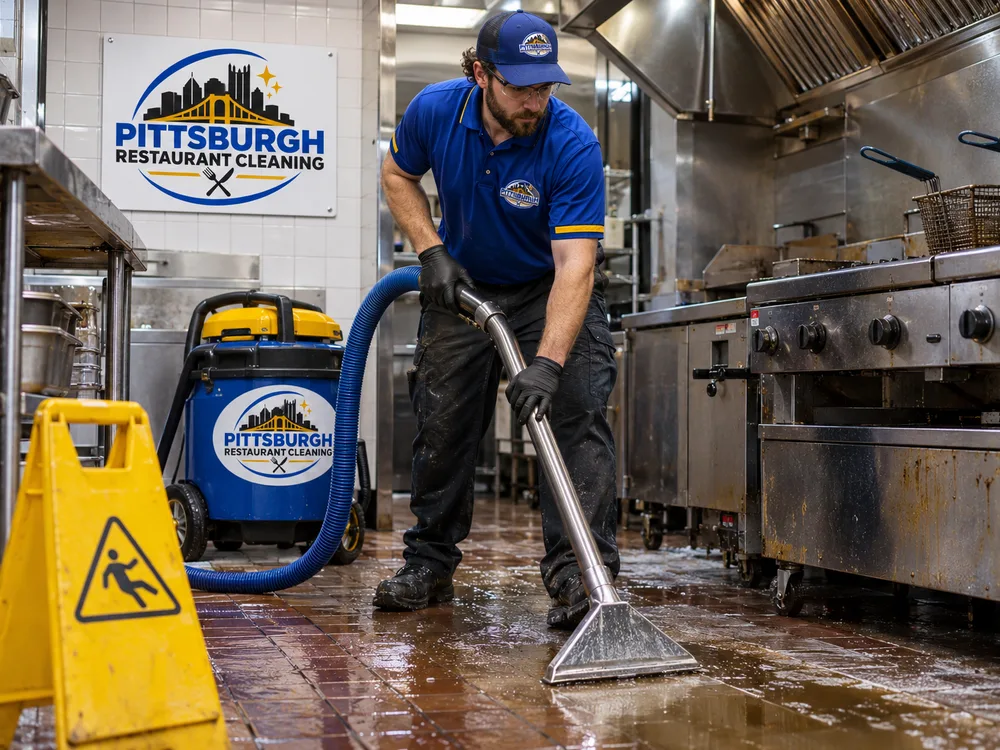
Effective kitchen floor degreasing depends on four connected factors: compatible chemistry, correct dilution, adequate dwell time, and thorough recovery. More chemical does not automatically produce a cleaner floor. An overly concentrated solution can be harder to rinse and may leave residue, while a weak mix or short dwell time may not break down established grease.
Equipment selection also changes with the room. A rotary floor machine or compact scrubber may suit open lanes, while hand tools are often needed around legs, curbs, corners, and fixed cooking lines. Low points and grout joints require careful liquid recovery. Floor drains can help with water management, but they do not replace controlled extraction or proper handling of grease-laden wastewater.
After cleaning, the floor needs enough time to dry before staff resume normal work. Slip-resistant footwear, routine spill response, clean mop solution, and correct daily chemical dilution remain important between professional visits. Deep cleaning supports routine maintenance; it does not replace it.
Commercial Floor Cleaning in Pittsburgh often needs to fit into narrow operating windows. Downtown service access may involve loading restrictions, elevators, or a longer equipment route. Strip District restaurants may need cleaning coordinated with deliveries and prep work. In Oakland, meal demand tied to nearby universities and medical facilities can make midday work impractical. South Side kitchens may prefer service after late closing times. The right plan accounts for these constraints before equipment arrives.
We ask what can be moved, who is responsible for moving it, when cooking equipment will be cool, where clean water is available, and how recovered solution can be handled. We also identify areas that must remain accessible. Those details shape labor, equipment choice, and drying time.
For recurring Restaurant Floor Cleaning in Pittsburgh, the useful question is not simply how often the floor should be cleaned. Soil load changes with menu, cooking volume, foot traffic, floor texture, ventilation conditions, and daily maintenance. An inspection-based schedule may focus more frequently on cook lines and dishwashing routes while treating lower-use areas on a different cycle.
Commercial kitchen floor cleaning in Pittsburgh typically costs about $0.30 to $0.75 per square foot, while smaller or heavily soiled jobs may carry minimum charges of roughly $300 to $600. Intensive grout work, thick grease, restricted access, and overnight scheduling can raise the total.
Final pricing depends on floor area, tile type, buildup, equipment movement, water access, extraction needs, and service frequency. A maintained open floor generally takes less labor than a congested kitchen with compacted grease. The exact cost is confirmed after an inspection and written scope.
A floor inspection can separate removable grease and residue from staining, worn finishes, or damaged grout, giving you a clear scope before service is scheduled.
Call for a Free QuoteMany restaurant kitchens can be cleaned within one planned service window, but the exact time depends on square footage, buildup, equipment clearance, and drying conditions. A compact Pittsburgh kitchen with clear access may take several hours, while a large or heavily soiled operation can require a longer shutdown or phased work. The service window is confirmed after inspection.
Cleaning can remove soil and grease from sound grout, but it cannot guarantee removal of permanent stains or restore missing and deteriorated joints. Pittsburgh kitchens with older tile assemblies may have grout that has darkened from years of use or previous chemical exposure. We distinguish removable buildup from material damage before setting expectations.
Accessible areas beneath movable equipment can be included when movement responsibilities and safety requirements are agreed upon in advance. Gas-connected, hardwired, plumbed, or fixed equipment should be handled only by qualified personnel when disconnection is required. The inspection establishes which edges, gaps, and equipment footprints can be reached safely.
Removing grease and cleaning residue can improve the condition of a contaminated floor, but no cleaning service can promise a slip-proof surface. Tile texture, worn finishes, standing water, active spills, footwear, and ongoing maintenance all affect traction. The floor must also be allowed to dry fully before normal traffic resumes.
After-hours service may be available and is often the practical choice when the kitchen can be cleared, cooking surfaces are cool, and enough drying time remains before prep begins. Downtown loading access, South Side closing times, and building access rules can affect scheduling. These details are reviewed before the appointment is set.
Deep-cleaning frequency should be based on soil load, cooking methods, traffic, floor texture, and the effectiveness of daily maintenance. A high-output cook line may need more frequent degreasing than storage or lower-traffic areas. After the initial service, the observed buildup rate can guide a sensible recurring schedule.
Staff should remove loose items and movable floor-level supplies included in the preparation plan, secure food and utensils, and keep the work zone free during service. Cooking equipment should be cool, and agreed water and access points should be available. Any equipment that requires a licensed trade to move must be addressed before cleaning begins.
Share the floor type, approximate area, operating hours, and main buildup concerns. Pittsburgh Restaurant Cleaning will discuss access, scheduling, and the appropriate cleaning scope for your restaurant.